_edited.png)


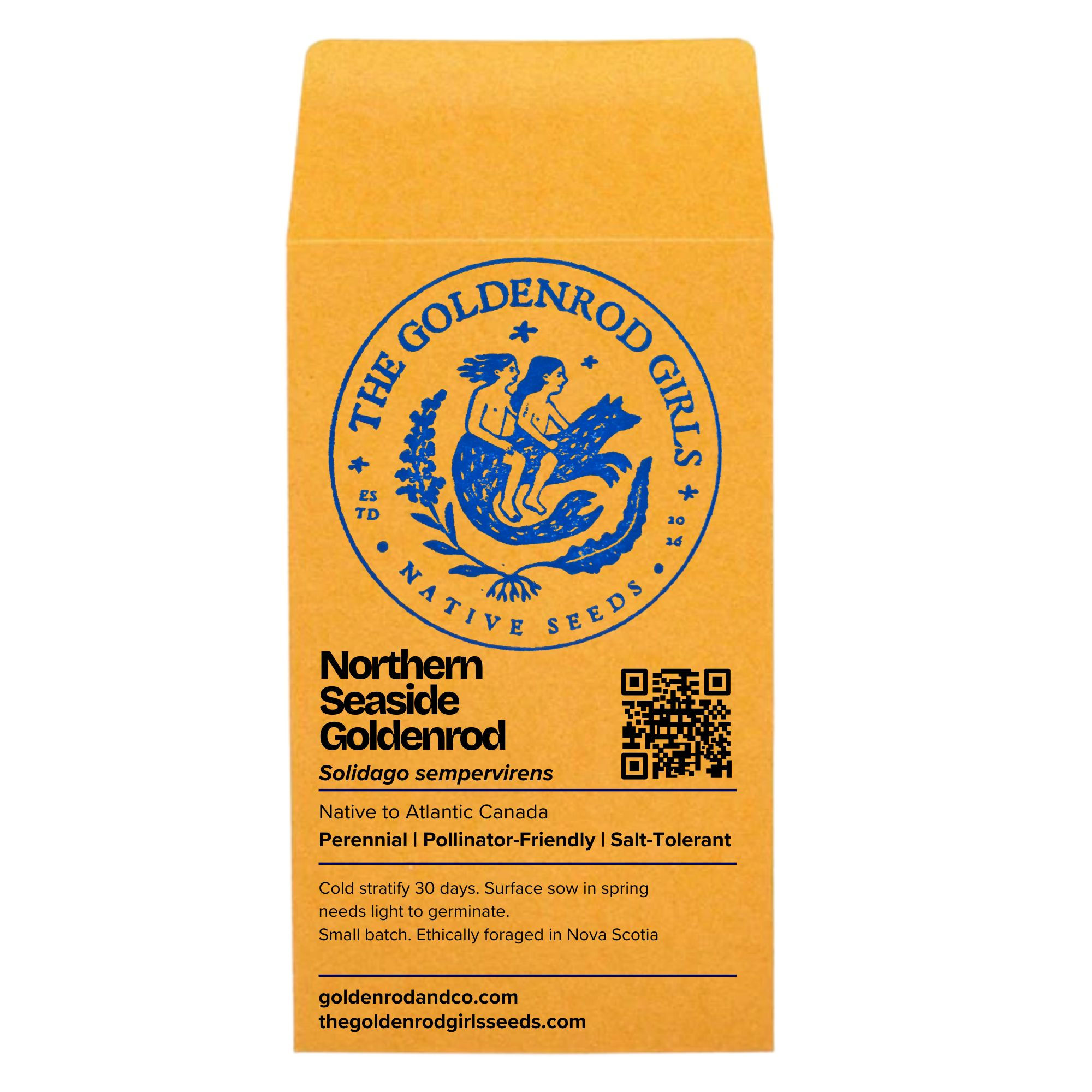

Northern Seaside Goldenrod Seed Packet
Solidago sempervirens
Northern Seaside Goldenrod is a striking coastal native known for its vibrant golden blooms and remarkable resilience. Naturally found along the shores of Atlantic Canada, this hardy perennial thrives in sandy, windy environments where many plants struggle to grow.
Blooming from late summer into fall, its bright yellow flower clusters provide a critical nectar source for bees, butterflies, and migrating pollinators preparing for the colder months. Highly tolerant of salt spray, drought, and poor soils, it is well suited to coastal gardens, meadows, and sunny landscapes with excellent drainage.
A vigorous and reliable grower, Northern Seaside Goldenrod forms expanding clumps over time and is especially valuable in coastal and restoration plantings where it helps stabilize sandy soils.
This species also inspired our company name. Its resilience and ecological generosity reflect the values at the heart of our work: restoring biodiversity, supporting pollinators, and cultivating landscapes that give back to the ecosystems around them.
Goldenrod Fact: Goldenrod is often blamed for seasonal allergies, but its pollen is heavy and carried by insects. Ragweed, which blooms at the same time, is usually the real culprit.